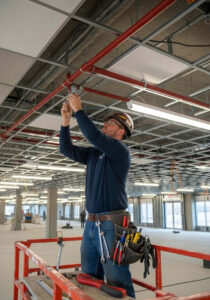
The 2026 Edition of NFPA 25 is an important update for the regulations associated with the inspection of fire sprinkler systems.
Fire sprinkler systems require regular attention to remain dependable. The 2026 edition of NFPA 25 updates the inspection, testing, maintenance, and reporting practices used for water-based fire protection systems. Property owners should understand these changes and determine when local authorities will adopt the new edition.
Updated Inspection and Testing Requirements
The 2026 edition of NFPA 25 includes several changes that may affect inspection schedules and procedures. Notable updates include:
- Solenoid monitoring devices must be tested quarterly.
- Dry-pipe, preaction, and deluge valves require annual internal inspections.
- Sprinklers installed in dwelling units for 50 years must either be replaced with fast-response sprinklers or have representative samples thermally tested.
- Spare sprinkler cabinets require more detailed inventory lists, including information about sprinkler types, quantities, and compatible wrenches.
- Fire department connection piping that is 10 feet or shorter may not require a five-year hydrostatic test when it can be inspected completely from the inside and outside.
These changes can require property owners to revise existing inspection calendars and plan for additional testing or replacement costs.
Corrosion Mitigation Requires Continued Maintenance
The new edition also addresses corrosion mitigation technology used in dry-pipe and preaction systems. When a system’s hydraulic calculations depend on an approved corrosion mitigation method, that technology must be inspected, tested, and maintained throughout the system’s service life.
If the corrosion control equipment is not properly maintained, the sprinkler system may require new hydraulic calculations and possible modifications. Owners should verify that nitrogen generators, vapor corrosion inhibitors, negative-pressure systems, and similar equipment are included in their maintenance agreements.
Clearer Responsibilities During Impairments
The NFPA’s overview of important changes emphasizes impairment notification. When a system becomes impaired, the owner or designated impairment coordinator may need to notify the authority having jurisdiction, fire department, and alarm-receiving facility.
A system containing ice is now specifically treated as impaired. It must be completely thawed, checked for damage, repaired, and tested before returning to service. The new guidance also addresses inactive components, including how abandoned piping should be marked and which valves or components must be removed.
Improve Fire Sprinkler Inspection Records
Accurate reporting is essential under the 2026 edition of NFPA 25. Inspection reports should document completed procedures, test results, deficiencies, impairment notifications, repairs, and return-to-service activities. Property owners should also maintain current equipment records and confirm that reported problems are corrected.
Because code adoption varies by jurisdiction, owners should consult their local authority and a qualified fire protection professional. Preparing now can make compliance easier while helping ensure that sprinkler systems remain ready to operate during a fire.
Contact Chesapeake Fire Protection Today!
Chesapeake Fire Protection (formerly Chesapeake Sprinkler Company) was originally founded in 1978 as a small family-owned business to serve the fire protection needs of the Baltimore and Washington, D.C. areas. You can rely on our extensive experience, knowledge of the latest technologies, and first-class fabrication facility to meet your fire protection needs.
Chesapeake Fire Protection became a Century Fire Protection Company in 2022. This allowed us to further expand our resources, capacity, and skills to serve our clients. We are headquartered in Odenton, MD with an additional branch office in Ashburn, VA.
Ready to get in touch? You can call us at our Odenton location at 410-674-7041 or our Ashburn location at 703-729-5150. You can also contact us for service and maintenance as well as emergencies at 410-674-7577. Find us on social media at Facebook, Twitter, and LinkedIn!